
 Canada
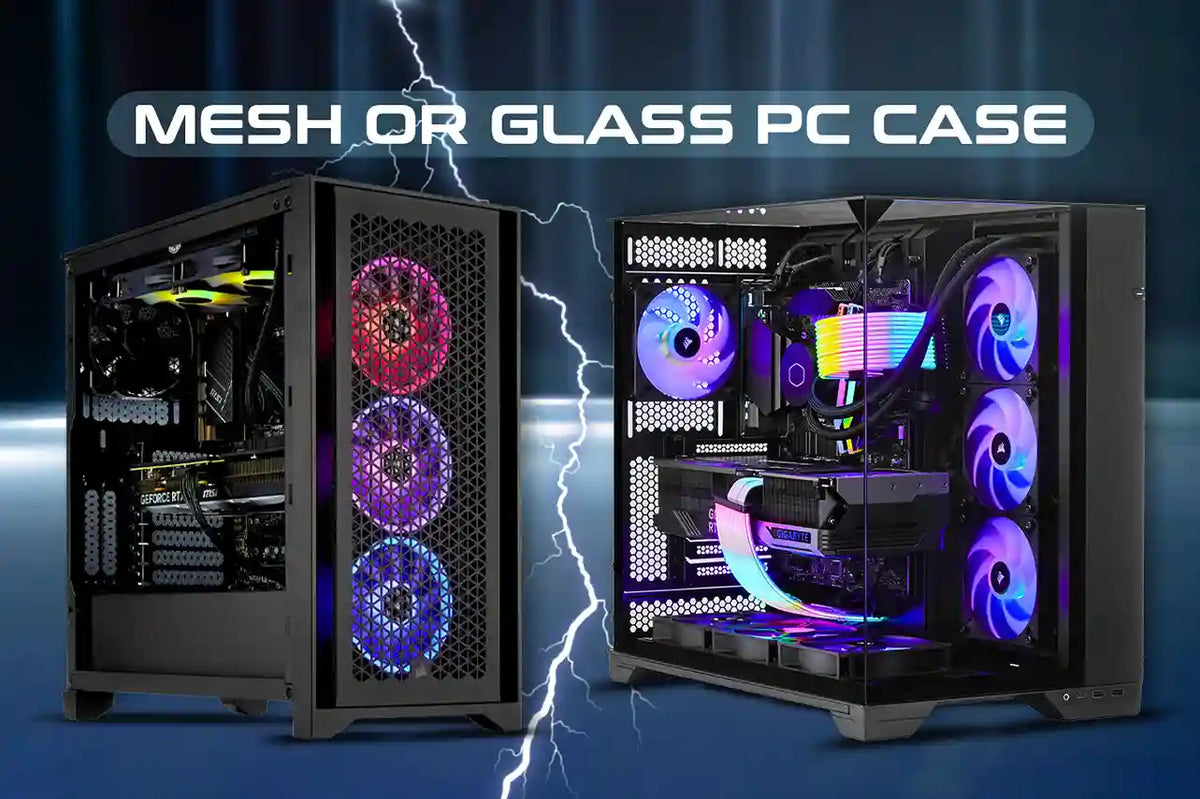
Choosing the right PC Case is one of the most important decisions for gamers and PC builders. Beyond simply housing your components, the case plays a key role in cooling efficiency, noise levels, and overall system performance.
The debate between mesh and glass designs has divided the PC building community: some prioritize high airflow, while others focus on showcasing the visual appeal of their custom builds.
In this blog, we’ll compare these two types of cases and help you decide whether a mesh or glass PC case is right for you.
What Are Mesh and Glass PC Cases?
Mesh PC cases feature perforated panels on the front, top, and, occasionally, the sides to optimize ventilation and encourage unrestricted airflow throughout the system. These designs prioritize functionality over aesthetics by using mesh filters and open construction to keep components cool even under demanding conditions.
Conversely, glass PC cases offer a crystal-clear view of your build with tempered glass panels on one or more sides. They emphasize design, allowing builders to showcase premium components, neat cable management, and custom RGB lighting.
Among enthusiasts who view PC building as both a technical pursuit and an art form, mesh and glass cases have steadily grown in popularity.
Cooling and Performance
Mesh cases show outstanding thermal management ability and airflow when evaluating cooling performance in contemporary PC builds. Minimal opposition to air movement is provided by the perforated panels, which let intake fans directly deposit fresh air onto components while exhaust fans effectively expel hot air.
Although aesthetically appealing, glass cases provide thermal difficulties. Solid glass panels obstruct natural convection and force systems to use only fan-driven airflow.
Actual testing shows notable performance variances. Under the same load circumstances, a high-end graphics card in a mesh PC case usually operates 8–12 °C cooler than those in a glass PC case. Processors also gain from enhanced thermal dissipation, therefore keeping lower temperatures that translate to sustained boost clocks and better long-term stability.
Aesthetics and Build Showcase
When it comes to visual appeal, glass cases take the lead. With clear views of neatly organized components, synchronized RGB lighting, and custom water-cooling loops, tempered glass panels turn PC builds into striking display pieces.
Additionally, the sleek, minimalist design of glass cases complements modern desk setups and allows builders to express creativity through component choices and lighting design. Customization possibilities are abundant, and cable management becomes a visible art form, encouraging builders to craft immaculate, well-arranged interiors.
However, this focus on aesthetics comes with trade-offs. The very features that make glass cases visually stunning can compromise the natural cooling performance that mesh designs provide.
Background Noise and Practical Considerations
Because of their pierced design, mesh cases normally allow more acoustic leakage. Mesh panels let fan noise, coil whine, and hard drive noises escape more easily, potentially producing a noisier gaming environment. Still, many people find this acceptable given the cooling advantages, and high-quality fans can greatly alleviate noise issues.
Better sound-damping characteristics are found in glass cases. The sturdy panels serve as barriers, enclosing internal noise and providing a quieter experience. However, this advantage can be lost when fans must operate at higher RPMs to combat heat buildup, offsetting the acoustic benefits.
Different types of PC cases also have different maintenance requirements. For optimal airflow and thermal management, mesh panels need regular cleaning as they attract dust quickly. Most mesh cases include removable filters to simplify this process. The glass PC cases, on the other hand, show fingerprints, stains, and dust more clearly, necessitating frequent cleaning to maintain their flawless appearance.
Mesh or Glass PC Case: Which Case Should You Choose?
Your priorities and intended use determine the proper PC case for you:
Mesh PC Cases
If you're planning to overclock your PC, use high-wattage components, or game in warmer conditions, go for mesh PC cases. They offer better cooling, which not only protects your investment but also enhances performance.
Glass PC Cases
Choose glass cases when visual presentation is most important, and you're prepared to spend on premium cooling systems such as AIO liquid coolers or high-performance air coolers to make up for limited airflow.
Hybrid Panels
Think about hybrid designs featuring glass panels for viewing and mesh portions for ventilation. These cases provide enough cooling while still enabling component visibility, a practical middle ground.
Combine your case choice with suitable cooling solutions while creating sophisticated systems with strong CPUs and GPUs. While glass casings usually benefit from liquid cooling that offers suitable thermal management despite airflow constraints, mesh cases work well with conventional air cooling.
Wrap Up
The choice between a mesh or glass PC case ultimately depends on your priorities. If maximum performance and cooling are your focus, mesh cases are the clear winner. If showcasing your build with style, RGB lighting, and clean cable management matters most, glass cases offer unmatched aesthetics.
Hybrid designs also provide a practical balance for those seeking both performance and visual appeal.
Ready to bring your dream PC to life? Visit TechnoidGamingPC today and start customizing your PC with the perfect case for your build.
Build smarter, play harder, and make your PC truly yours.
People May Ask
For cooling, are mesh PC cases always better?
Although open airflow usually provides better cooling in mesh cases, the benefit depends on proper component arrangement and fan design. Thermal problems can still arise even with a poorly set-up mesh case.
Can glass PC cases cause my components to overheat?
Glass PC cases can run hotter than mesh cases, but proper fan configuration, high-quality cooling solutions, and enough ventilation points prevent overheating in most circumstances.
Would hybrid mesh-glass cases be worth investigating?
Hybrid designs offer a great compromise by combining tempered glass panels for showcasing your build with mesh sections for proper ventilation. Users seeking both performance and aesthetics will find these cases ideal.
In noise levels, how do mesh and glass PC cases vary?
Mesh cases frequently let more noise out, but glass cases offer better sound damping. However, the acoustic benefits of glass cases may be outweighed by the need for faster fan speeds to maintain ideal temperatures.
Which PC case type is better for RGB and showcase builds?
The clear panels of glass cases make them popular among builders who value visual appeal, as they effectively showcase custom components and RGB lighting.